
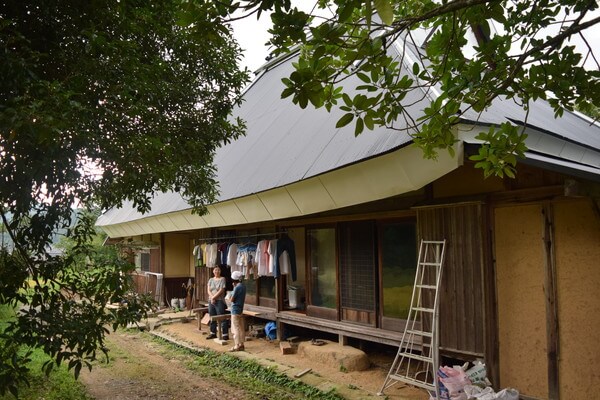
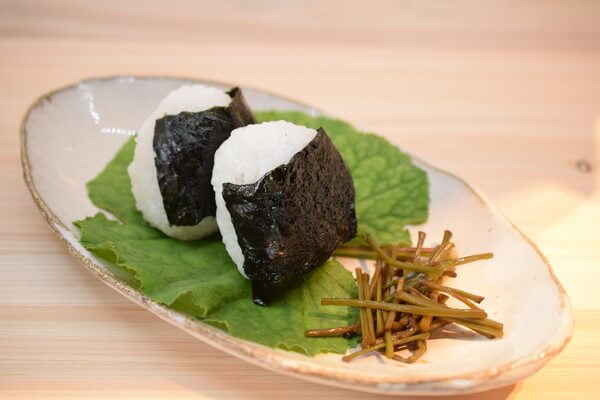
The Farmhouse Inn 手紙の木の家, The Letter Tree’s House, in Ayabe, Kyōtō (photos taken from ayabe-kankou.net/inn/tegaminoki/)
Hello! And welcome to the second (technically third?) newsletter of the blog on our co-translation journey of Naoki Shiomi’s book 88 Concepts From Half Farmer Half X to One Person One Research Centre where we share updates on our journey, excerpts and things we found interesting that we think you dear reader(s) might enjoy.
As with the previous newsletter, in starting to write my mind is flooding with things to write about.
The first thing that I would like to touch upon is what’s in the title, the shape of what seemed most apt to us to co-translate as ‘farmhouse inn’,
農家民泊
農家, のう pronounced nooo, meaning ‘farmhouse’
民泊, みんぱくpronounced minpaku, meaning ‘inn’
A concept pioneered in the town of Ajimu in Ōita prefecture, they’ve become quite common, although from what I read it was not always so.
Renovating and re-purposing these old and (I find) really beautiful homes fulfills the dual purposes of re-using abandoned buildings and attracting people to move to the countryside and start a slower way of life; potentially opening their own inn, small business or café.
From my understanding, this can be a contributing factor towards rural revitalization. The significance of this, from what I’ve heard from a former Japanese teacher, is that government funding for vital services like healthcare (medical clinics) and childcare (nursery schools, elementary and high schools) stops being provided to a region once the population there drops below a certain number.
So… back to the Shape of Farmhouse Inns. In the first chapter of the book, a short exercise was introduced in which you multiply three keywords that describe who you are or what fields you’re a part of and put them over the place(s) you live and work as a way to recognize your uniqueness in the world.
For example for me at this point in time it might be something like:
co-translation x nonviolent global liberation x illustration
Gaspésie
Probably, there is no one else in this region doing this exact combination of these three things.
For Mika, I remember it being something like:
translation x meditation x macrobiotic cooking
Nagano
I think likely, the same goes for her.
In this way, the same thing can be done for a farmhouse inn by adding two more keywords to a main keyword such as peace, art, music, or natural food, etc. So that while farmhouse inns may all seem similar from the outside, they still have their own personalities and originality.
The reason I want to highlight this particular way of thinking in a newsletter is that in reading section 32 with Mika, I was really in awe about something.
For background context, Shiomi-san shares in that section a dilemma he faced as part of the staff of a sort of community centre called Satoyama Net Ayabe. Formerly the grounds had been his old elementary school, West Toyosato Elementary, and had been converted into a centre for meeting and hosting events. At the beginning they didn’t have lodgings on the grounds which limited the amount of time people could come and meet there (for conferences, events, etc). There also weren’t other lodgings that far out in the countryside. At the time, he visited a popular farmhouse inn he read about in the newspaper in Ajimu in Ōita prefecture where he realized the applicability of such a concept in Ayabe.
The thing related to this that touched me was reading that the phenomenon he worried would be replicated of one inn holding monopoly in a region that he encountered in Ajimu, somehow didn’t happen in Ayabe.
Following Satoyama Net Ayabe’s introducing lodgings as part of their facilities so that people could stay multiple days, Ayabe is now home to over 20 farmhouse inns.
What gives me hope in reading about the various inns on the Ayabe tourism site is that they don’t seem to me to compete for highest cost. And actually, they seem to me like they are competing for most reasonable cost (which I consider to be under the 10,000 yen mark a night, so less than about $100 Cad per night with full breakfast and dinner included).
For those who are not yet familiar with inns in Japan, there is usually a traditional spread of breakfast and dinner included that look something like the below photos.


Photos by nameofmin on Unsplash (left) and helovi on iStock (right).
Taking into consideration that the food used to cook meals at farmhouse inns is usually from nearby outside, organic and seasonal, I find it very generous and quite the feat that they were able to create a small community of farmhouse inns like they did without recreating a monopoly.
A roadblock to sending money to our illustrator…
The same artist, Carolyn Raider, behind the thumbnail of the Upstream podcast conversation between Della Duncan, Mika and Shiomi-san on Half Farmer Half X is designing some possible options for the cover of our translation.
The money transfer gods are against us and through a really trivial billing address not matching error and several calls with both my bank and Paypal later, I am at an impasse on how to send Carolyn money…
I think I will try deleting my Paypal address and re-adding it this weekend. Please wish me luck if you are willing.
A possible move to Part Farmer Part X from Half Farmer Half X?
In the above podcast conversation and also in Shiomi-san’s book, he talks about how Half Farmer Half X doesn’t actually strictly mean “Half”.
Although when he first thought of this concept at 27, that was indeed what he meant. It later evolved into becoming any percentage of step, however small or large, towards growing some food. While the second part of it could represent a multitude of other things that could be considered someone’s X.
The concept has even grown past the point of representing just two things but has now become more of a placeholder for any combination of things that might come close to describing the multitudes of who you are as a person and what you do.
For example, when me and Mika had read the part in the book that explained this, I came up with 1/3 co-translating 1/3 handicrafts and 1/3 farming.
It could really be anything. An analogy I’m currently using to describe the six things I’m currently focusing on is the 6 legs of a 9 foot table. I’ve also used the five points of a star in the past to help me focus and remember. I’m a very visual person so images upon images help me focus and remember what I am doing.
All this to say that in a herbalist workshop I attended at a local community centre recently, I heard the community herbalist say that she works in parts and not specific measures.
I remembered the wisdom of the book Ratio on cooking with ratios to unchain from recipes and thought that Part Farmer Part X could be a possible translation that conveys the actual meaning of the concept more accurately while moving away from concepts of fairness.
I’ve heard fairness described as coming from scarcity whose definition I’ve adopted as the fear of not having enough to meet needs later and so using and accumulating more than you need now.
This takes resources out of circulation and reduces the earth’s and people’s capacity to regenerate.
While I don’t think Shiomi-san has the specific intention to move away from fairness with this concept, at the very least I see the move to part encompassing the not-half nature of it.
Although, Shiomi-san has written that using the term part-time farmer in the past did not catch as well as half farmer. So maybe there is something in the specificity of half that is catching and the way out of the half part is to go through the half and then explain that it’s not actually meaning half. Ah, language.
What are your thoughts on using Part Farmer Part X in contrast to Half Farmer Half X?
Also, if you were to open a farmhouse inn, what would be the shape of it? What three key words would you use to describe it?
 Book Updates and Our Co-Translation Journey
Leave a comment