Welcome again to the second newsletter about our co-translation journey of Naoki Shiomi-san’s book 88 Concepts: From Half Farmer Half X to One Person One Research Centre and about the book itself.
This is Katherina, although Mika plans to write and/or contribute to some short newsletters in the future as well.
I alluded to this on the website itself, but it has taken me a lot longer than I wanted to be able to write a newsletter regularly and send it out, largely due to limited capacity and doubt. But now that I am sitting down to write, all of my fears about not knowing what I’ll talk about have dissipated as there is so much I am wanting to write about just in starting to write these brief paragraphs now.
There has been so much rich and deep conversation between me and Mika and also so much learning in regards to co-translation that I want to share as much of it as is possible for us to share now in these next stages.
I’ll start with my learnings on the expressions 手を入れること and 手入れの思想 which I found intriguing. They are both expressions that are used to describe the strengths of satoyama by Shiomi-san in section 33 entitled Stillness and Bustle; Building Households and Developing Communities for a New Era.
They struck me as interesting expressions as they are expressions that if you were to translate literally (like most other words of phrases that I’ve encountered), wouldn’t necessarily give you a meaning that makes sense.
Something I found deeply intriguing about kanji characters in my kanji classes at Kyōtō university and also during reading sessions in a former weekly contemporary Japanese novel reading group was how learning about the original context in which expressions were created helped inform their deeper meaning to me. It was particularly interesting for me to see as well how the meaning of a character, word or phrase could take on a different meaning over time. To learn their different constituents had also helped me remember them over time.
In the context of the strengths of satoyama, Mika explained what 手を入れること meant in the following way:
Satoyama is a place that you really need to take care of. Once you start cutting trees it’s no longer natural. So you have to keep doing it in order to maintain it. If you stop, the nature gets too wild. It’s more like things get destroyed (buildings etc). Continually taking care of something. A little bit of intervention is important. It’s like cooking. You can eat it as it is or you can add a little bit of something; adding water, and adding fire to feed your body. If you add too many spices it becomes difficult to eat. We call it ambai, what is just right? -Mika
So the meaning that it takes on for me is ‘tending to things’ and in the term 手入れの思想 taken from a book written by anatomist Takeshi Yoro; it takes on a meaning that I’d co-translate as ‘tending to thoughts’. This reminded me of the complete paradigm shift that encountering the buddhist principle of being responsible for even your thoughts had on me in my early twenties.
I haven’t lived in the satoyama yet to know what Shiomi-san means by tending to your thoughts being a quality experienced there but I imagine it’s something along the lines of people caring for relationships to a degree that is more than what you’d experience in cities. Whether that’s through a genuine sense of community or everyone knowing each other and the impacts people have on each other being more visible, or some sort of combination of all of the above.
If we were to break it down literally, it would be putting your hands into things.
手, て (hand)
入れる, いれる (to put into)
思想, しそう (thoughts)
手を入れること (tending to things, taking care of things)
手入れの思想 (tending to thoughts)
What are your reflections and/or thoughts about how 手を入れること and 手入れの思想 is present in satoyama or any countryside/rural area/small town/community that you’ve encountered or lived in?
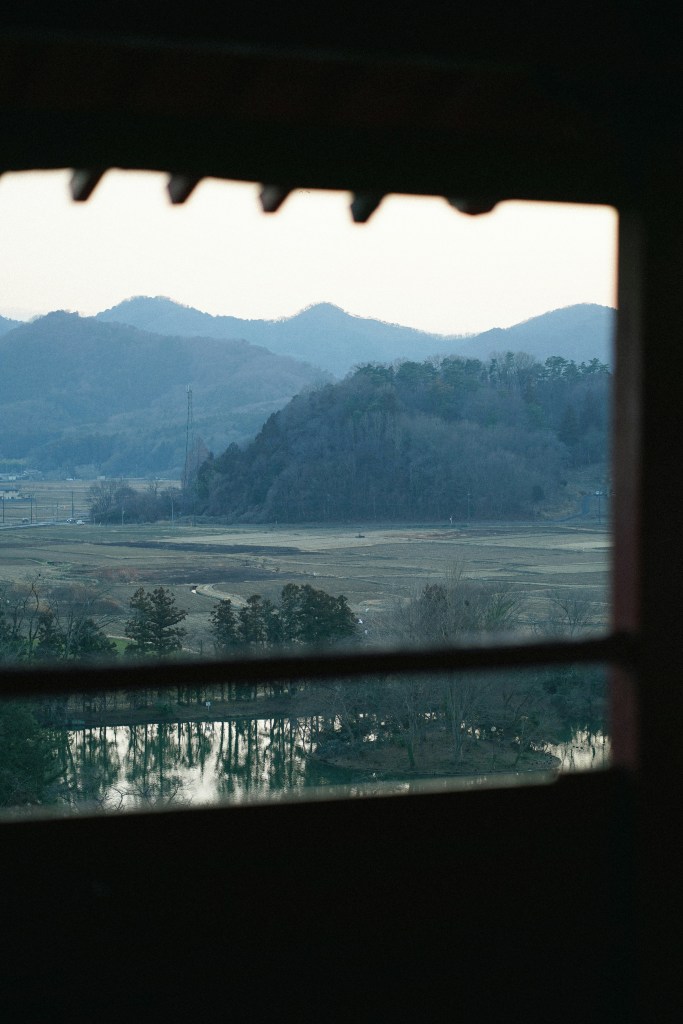
Photo by Yosuke Ota on Unsplash
 Book Updates and Our Co-Translation Journey
Leave a comment